
How to form a company in the Netherlands
Choose a Dutch legal form, confirm real business activity and a suitable address in the Netherlands, prepare founder and ownership records, and complete the registration route. For a BV, a Dutch civil-law notary draws up the deed and articles and arranges registration with the Chamber of Commerce (KVK).
Most founders seeking a separate Dutch company use a besloten vennootschap (BV). It can have one shareholder and starts with at least €0.01 in share capital. A Dutch civil-law notary prepares the incorporation deed and articles, and registers the BV, directors and ultimate beneficial owners where required. KVK supplies a registration number and passes details to the Dutch Tax Administration, which assesses tax registrations. Living abroad does not by itself prevent ownership or management, but the business needs genuine Dutch activities and an appropriate Dutch business address; company ownership does not grant a right to live or work in the Netherlands.
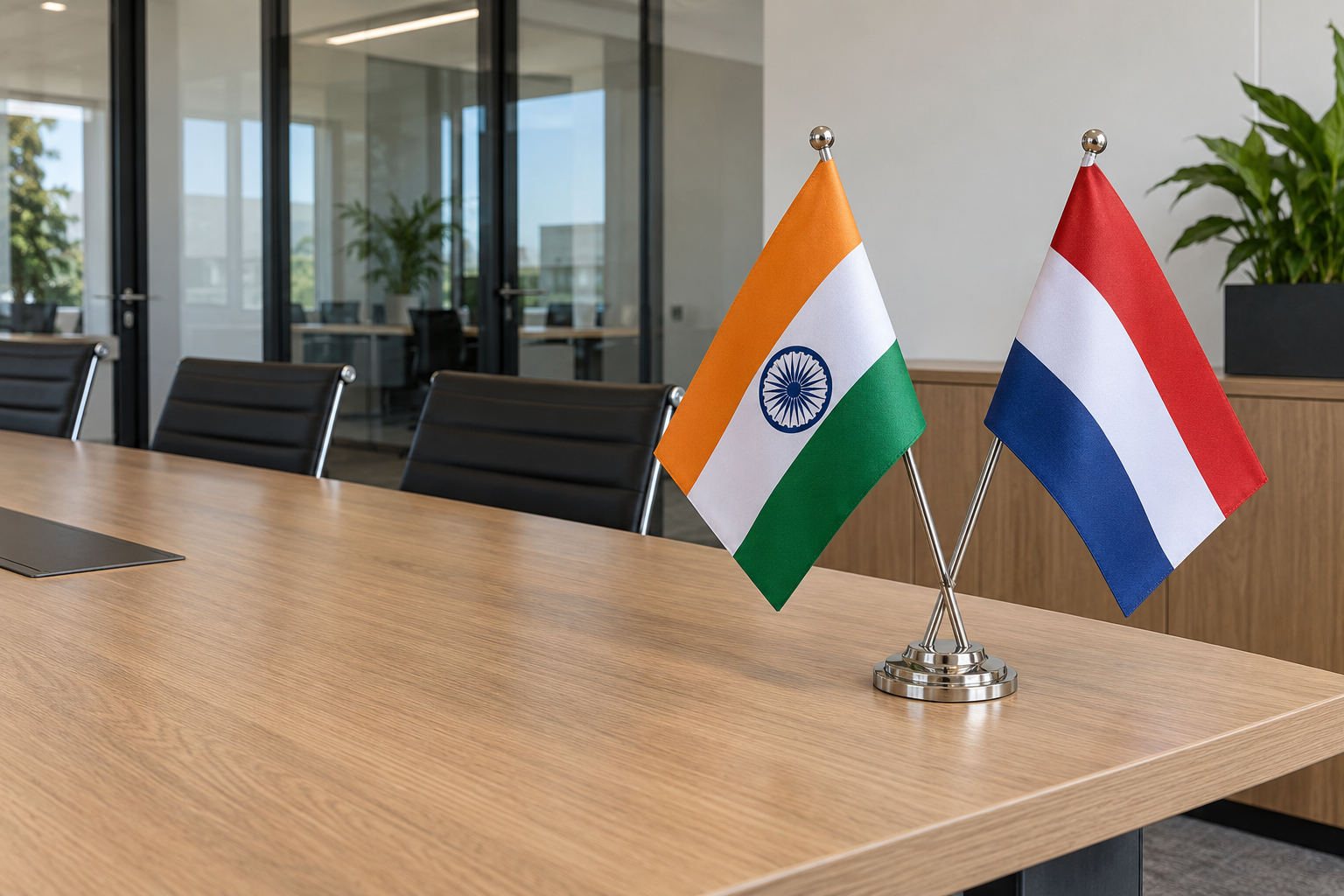
Non-resident: Foreign ownership is possible with genuine Dutch activity
The notary, KVK, tax authority and bank each review different parts of your setup. Plan the file together.
Steps to form a company in the Netherlands
From plan to operating company.
A typical BV follows this route. A sole trader, partnership or foreign branch has a different registration path.
Decide and prepare
Choose the legal structure
Compare a BV, sole trader, partnership, cooperative or branch by liability, investment plans, tax treatment and the work to be carried out in the Netherlands.
Confirm the Dutch activity and address
Define the structural physical business activity and arrange a suitable Dutch business address with evidence you may use it. A post-office box alone is insufficient for registration.
Prepare founders and ownership
Set the company name, business activities, shares, directors and ownership chain; collect identity, address and corporate shareholder records. Check UBO information early.
Engage a Dutch civil-law notary
The notary checks the file, drafts the BV incorporation deed and articles of association, and establishes the signing and identification route for people abroad.

Prepare one consistent ownership file.
Set the company name, business activities, shares, directors and ownership chain; collect identity, address and corporate shareholder records. Check UBO information early.
Register and operate
Sign and contribute share capital
Execute the deed and arrange the agreed shares and capital. A BV has no substantial statutory minimum: at least €0.01 share capital is possible, but working capital should reflect the business.
Register with KVK and record UBOs
The notary normally files the BV with the Dutch Business Register and submits the required UBO registration. Obtain the KVK number and check the registered details.
Complete tax and banking setup
KVK passes details to the Dutch Tax Administration. Confirm corporate tax, VAT and payroll obligations that apply; separately complete the bank or payment provider’s checks.
Set up ongoing compliance
Arrange bookkeeping, annual accounts, tax returns, director-pay review, UBO updates, licenses and cross-border reporting where relevant.
Types of companies and business presence in the Netherlands
Choose the structure that fits the actual Dutch operation and the liability your founders can accept.
BV — private limited company
A separate Dutch legal person with shares. Shareholders generally have limited liability, subject to exceptions such as improper management or personal guarantees.
One shareholder is enough; at least €0.01 in share capital is possible.
NV — public limited company
A company with transferable shares and more formal requirements, often suited to larger businesses and capital raising.
Minimum issued and paid-up capital is €45,000.
Eenmanszaak — sole trader
A person operates the business directly. It is simpler to register but is not a separate legal entity; the owner is personally liable for business debts.
One person can register only one sole-trader business, with multiple trade names or activities.
VOF — general partnership
Partners operate under a shared business name and can be personally liable for partnership debts. A clear partnership agreement is valuable.
Not a limited-liability substitute for a BV.
Cooperative
A membership structure used where participants pursue a shared commercial objective. Governance and liability terms depend on its statutes and form.
A Dutch civil-law notary is required to establish it.
Dutch branch
An establishment of a foreign parent, rather than a new Dutch legal person. KVK registration and Dutch taxes may apply to its activities.
The parent remains responsible for branch obligations.
Documents needed to form a Dutch company
Collect a working file before instructing the notary. Requirements for original, translated, certified or legalised documents depend on the founders and country of issue.

Founders and management
- Valid identification and residential-address details for shareholders and directors.
- Shareholding, management and signing arrangements.
- UBO information and ownership-chain evidence.
- Source-of-funds and business activity records for bank checks.
Dutch company details
- Proposed name, activities, legal form and statutory seat.
- Suitable Dutch business address and proof of permission to use it.
- Draft deed of incorporation and articles from the notary.
- Capital and share-allocation information, plus any sector permit needs.
If a foreign company owns it
- Recent parent-company registration extract and constitutional records.
- Resolution or authority for the investment and signatory.
- Full ownership chain and ultimate beneficial-owner details.
- Translations, apostille or legalisation where the notary requires them.
Resident vs non-resident company formation
Residence affects identification, travel and immigration planning. It does not automatically decide whether a person can own a Dutch BV.
| Decision | Founder living in the Netherlands | Founder living abroad |
|---|---|---|
| Shareholding | May own a BV, subject to normal formation checks. | May also own a BV; foreign residence alone is not a bar. |
| Managing director | May serve if otherwise eligible. | May serve from abroad, but practical management, identification and tax residence need review. |
| Dutch activity and address | Needs a legitimate Dutch business address and actual business activity. | Still needs structural physical business activity and an appropriate Dutch address; a PO box is insufficient. |
| Notary and documents | Local identity and signing arrangements can be more direct. | Ask the notary about remote or proxy signing, legalised identity/address proof and translations. |
| Banking and taxes | Bank due diligence and Dutch tax obligations still apply. | Remote verification, overseas ownership and treaty questions may require more preparation. |
| Permission to work | The person’s immigration status must allow the intended activity if applicable. | Ownership gives no automatic residence or work right; non-EU/EEA/Swiss founders should check the applicable permit before on-site work. |
“Federal” vs local incorporation in the Netherlands
There is no federal incorporation election in the Netherlands. Dutch company law and the national KVK register establish the framework; municipality and sector requirements follow the actual location and activity.
Dutch incorporation
- A civil-law notary draws up the BV deed and articles under Dutch law.
- KVK maintains the national Business Register and handles registration.
- The Dutch Tax Administration assesses corporate tax, VAT and payroll registrations as applicable.
Municipal and sector steps
- The company needs an appropriate address linked to real Dutch activity.
- Local zoning or location rules can affect where it may operate.
- Sector licenses, environmental permissions or municipal permits may be needed for particular work.
Problems foreign founders face, and how to solve them
A smooth filing starts with a credible operating plan, an accepted address and a complete ownership file.
An address without actual Dutch activity
A mailbox or nominal address does not establish the structural physical business activity required for most overseas founders to register.
Practical step: Document the intended physical business activity and obtain proof that the Dutch address can be used for it. A PO box alone is insufficient.
Foreign documents rejected by the notary
A parent register extract, authority or identity document may need different authentication or translation.
Practical step: Ask the Dutch civil-law notary which parent records, identity proofs, translations and legalisation are needed before preparing them.
UBO chain is difficult to prove
Layered foreign ownership can slow notary, register and bank checks.
Practical step: Map each ownership layer to the natural persons who ultimately own or control the company, and keep the evidence consistent across the notary and bank files.
Bank approval is assumed
A KVK number does not guarantee an account; providers conduct their own identity and source-of-funds checks.
Practical step: Prepare identity, business activity, UBO and source-of-funds evidence early. A KVK number does not guarantee a bank account.
Tax and director pay are missed
Corporate tax, VAT, payroll and customary director salary rules may matter soon after formation.
Practical step: Identify corporate tax, VAT, payroll and director-major-shareholder salary questions before trading or paying anyone.
Ownership is mistaken for immigration approval
A foreign founder may own a BV but need a separate permit to live and work in the Netherlands.
Practical step: Check the relevant residence and work permit route before planning on-site work. Ownership of a BV gives no automatic immigration permission.
Costs, timing and ongoing obligations
The €0.01 minimum share capital is separate from setup fees and working capital.
Formation costs
Budget for the Dutch civil-law notary, KVK registration, identification or translation, a suitable address, banking and bookkeeping. Dutch government guidance gives an indicative notary range of €500–€1,500; quotes depend on complexity.
Where delays arise
The notary’s review, foreign documents, proof of Dutch business activity and address, signing arrangements and bank checks drive the schedule. Do not treat a KVK filing as a guaranteed bank opening date.
After registration
Track annual accounts filed with KVK, corporate tax, VAT where applicable, payroll and director salary rules, UBO changes, permits and any relevant home-country reporting.

Account for the full first year.
Before you file: request a written breakdown of official fees, outside services, annual duties and the steps that depend on third-party approval.
Source check: Business.gov.nl and KVK guidance for Dutch BVs.
Frequently asked questions
40 practical answers grouped by topic. Open a question for the detail. Choose a topic or show all.
Can a foreigner form a company in the Netherlands?
Yes. Foreign residence does not by itself prevent a person from owning a Dutch BV. Registration from abroad requires a real Dutch business activity and suitable Dutch address; immigration is separate.
What is the simplest route to a separate Dutch company?
For many founders it is a BV formed by a Dutch civil-law notary. A sole trader can be simpler administratively, but it is not a separate legal person and carries personal liability.
Can a BV have one owner?
Yes. A single shareholder can establish a BV. The founder may also be a director, subject to the usual checks and duties.
What share capital does a BV need?
There is no substantial statutory minimum. A BV can start with at least €0.01 in share capital, though it still needs enough funds for its actual obligations.
Do I need a Dutch business address?
Yes, a registrable Dutch business address is needed for Dutch operations. A PO box alone is not sufficient, and founders abroad must demonstrate structural physical business activity in the Netherlands.
Can I use a virtual office?
Do not assume a mail-forwarding address is enough. The address must be suitable for the real activity and supported by permission to use it; ask KVK and the notary about your exact setup.
Can a non-resident be a BV director?
A director can live abroad, but the notary may request legalised identity and address evidence. Where management happens can also affect tax and practical administration.
What should an overseas BV founder plan before signing?
Does owning a BV grant a Dutch visa?
No. Ownership and residence or permission to work are separate. A founder who plans to live or work in the Netherlands should check the applicable immigration route.
How long will formation take?
There is no fixed timeline for every case. Notary availability, foreign documents, address evidence, KVK processing and bank due diligence can change the schedule.
What is a Dutch BV?
A private limited company with its own legal personality. Shareholders generally risk their investment, but directors and shareholders can face exceptions to limited liability.
How is an NV different from a BV?
An NV is a public limited company with a €45,000 minimum capital requirement and a different share and governance model. A BV is more common for privately held operating companies.
Should I use a sole trader or a BV?
A sole trader is simpler and personally liable; a BV is a separate legal person with notary, accounts and corporate tax duties. Compare profit, risk, investment and director pay.
What is a VOF?
A general partnership in which two or more people operate together. Partners can be personally liable for partnership obligations, so an agreement and liability review matter.
Can a foreign company own a Dutch BV?
Yes. The notary will ask for evidence of the parent company, its signatory authority and the ownership chain. The parent should also check its home-country investment rules.
What documents do individual founders need?
Usually valid identification, address details, proposed company name and activities, directors, shareholders, shares and a suitable Dutch business address. The notary sets the exact file.
What if a foreign parent is the shareholder?
Expect a current company-register extract, constitutional documents, authorising resolutions, signatory evidence and UBO chain. Translation or legalisation may be required.
Which documents should the Dutch notary see first?
Who counts as a UBO?
An ultimate beneficial owner is a natural person who ultimately owns or controls the company under the applicable Dutch rules. The notary can assess the particular ownership chain.
Can I register a branch instead of a BV?
An existing foreign company may register its Dutch branch. The branch is not a separate legal entity, so the parent remains responsible for it; tax treatment depends on its operations.
What does a Dutch civil-law notary do?
For a BV, the notary draws up the incorporation deed and articles, verifies the parties and normally registers the company, directors and required UBOs with KVK.
What is KVK?
The Kamer van Koophandel is the Dutch Chamber of Commerce. Its Business Register records companies and other entities operating in the Netherlands.
What is a KVK number?
It is the company’s Dutch Business Register identifier issued after registration. A VAT identification number is separate and depends on the tax authority’s assessment.
Will KVK automatically issue my VAT number?
KVK forwards business data to the Dutch Tax Administration, which assesses whether the company is a VAT entrepreneur and sends the applicable tax details. Do not equate registration with VAT approval.
What documents may a Dutch bank request?
Is a Dutch business bank account guaranteed?
No. Financial institutions apply independent customer due diligence. A completed BV registration does not compel a provider to accept the company.
What taxes may a Dutch BV pay?
Corporate income tax can apply to taxable profit. VAT and payroll taxes may also apply to transactions and employment; distribution and cross-border rules need separate review.
What are Dutch VAT rates?
The standard rate is 21%; reduced rates of 9% and 0% apply to specified supplies, and some activities are exempt. The right treatment depends on what and where you sell.
Does a director-shareholder need a salary?
The Dutch customary salary rule can apply to a director who has a substantial shareholding. A Dutch tax adviser should assess the current threshold and any justified adjustment.
Does a BV file annual accounts?
Yes. A BV prepares and files annual financial statements and meets corporate tax and other applicable reporting obligations. Filing rules and deadlines depend on its circumstances.
Must I live in the Netherlands to run a BV?
No automatic residence requirement applies just because you own or direct a BV. But the Dutch operation must be genuine, and foreign management raises practical and tax questions.
Can an Indian company own a Dutch BV?
A foreign company may own the shares. An India-based investor should separately check Indian overseas-investment and remittance requirements alongside Dutch notary and bank checks.
What does an India-linked Dutch setup require on both sides?
Is a Dutch branch a separate company?
No. It is part of the foreign parent. A Dutch subsidiary such as a BV has separate legal personality and its own obligations.
When does a branch owe Dutch tax?
A foreign company may have Dutch corporate tax obligations if its activities create a permanent establishment or other taxable presence. The treaty and facts must be assessed.
Can I register a Dutch company with only a PO box?
No. A PO box is insufficient as the required business address. Founders abroad also need structural physical business activity in the Netherlands for ordinary registration.
Is there federal versus state incorporation?
No. The Netherlands has Dutch national company law and a national Business Register. Municipal rules and sector permits apply to the location and activity, rather than offering a second incorporation system.
Will I need a municipal or sector permit?
Possibly. Retail, hospitality, food, financial, environmental and other regulated activities can require extra checks or permits before operation.
What ongoing records should foreign owners maintain?
Keep accounts, annual filings, UBO changes, tax returns and decisions about dividends, payroll and transfer pricing where applicable. Cross-border owners should review both jurisdictions.
What duties continue after incorporating a Dutch BV?
Before you file a Dutch company
Choose the legal form based on the actual operations, liability and tax position. For a BV, confirm its Dutch business activity and usable address, founders, directors and ownership chain before instructing a civil-law notary.
After the deed and KVK entry, verify tax registrations, bank requirements, annual accounts, permits and any home-country rules. A company, bank account and residence permit are separate decisions.