

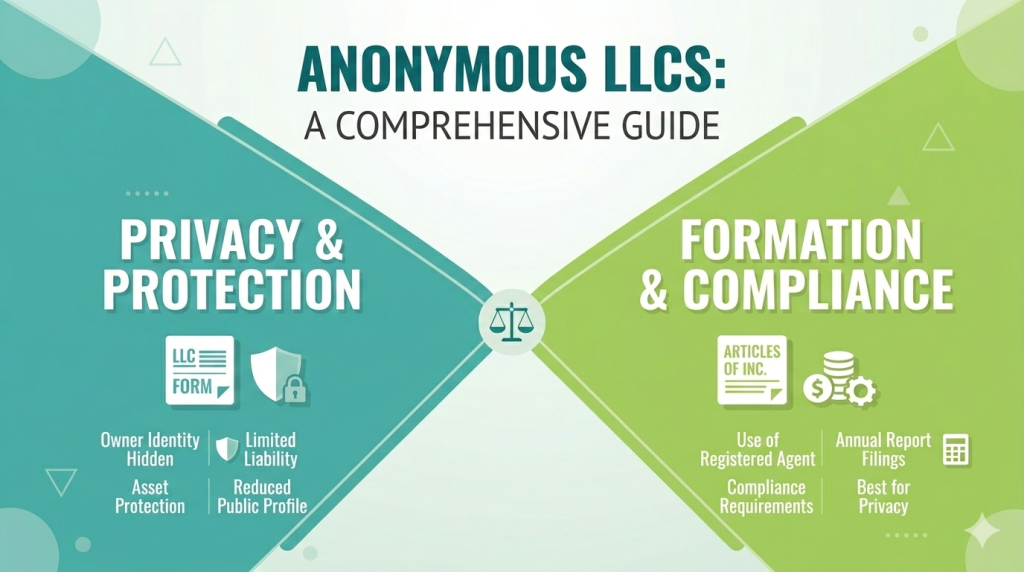
If you’ve ever wanted to start a business while keeping your personal information out of the public eye, an anonymous LLC might be exactly what you’re looking for. Whether you’re a real estate investor, an online entrepreneur, or simply someone who values privacy, understanding how anonymous LLCs work can be a game-changer for how you structure your business.
What Is an Anonymous LLC?
An anonymous LLC is a limited liability company formed in a way that keeps the owner’s identity hidden from public records. In most states, when you form an LLC, your name and address become part of the public record, so anyone can look up who owns a business with a simple online search. An anonymous LLC is designed to prevent that.
It’s important to note that “anonymous LLC” isn’t a formal legal term. Rather, it describes a strategy that takes advantage of certain states’ formation rules, which don’t require the names of LLC members or managers to appear in public filings.
Why Would You Want an Anonymous LLC?
There are several legitimate reasons why someone might want to keep their business ownership private.
Privacy from the public. If you own rental properties, for example, you may not want tenants, competitors, or litigious individuals to easily trace your assets back to you. Keeping your identity off public records adds a meaningful layer of protection.
Asset protection. When ownership is harder to trace, it becomes more difficult for potential plaintiffs to identify and target your assets in a lawsuit.
Protection from targeted solicitation. Once your name is attached to a business filing, you may start receiving unsolicited calls, emails, and mail from vendors and marketers. An anonymous LLC helps you avoid that noise.
Personal safety. In some situations, such as for public figures, domestic abuse survivors, or activists, keeping business ownership private can be a genuine safety concern.
How Does an Anonymous LLC Work?
The core strategy involves forming your LLC in a state that does not require the disclosure of member or manager names in its public formation documents. You then use a registered agent service to handle official correspondence and appear in filings in your name.
There are a few common approaches:
Use a privacy-friendly state. States like Wyoming, Delaware, New Mexico, and Nevada are popular choices because they allow LLCs to be formed without listing member or manager names in public records. Of these, New Mexico stands out because it doesn’t require an annual report, which means your privacy is maintained on an ongoing basis without additional filings.
Use a registered agent. Every LLC must have a registered agent, a person or company designated to receive official legal and government correspondence. By using a professional registered agent service, your personal address stays off public filings.
Use a nominee or manager-managed structure. In some cases, people use a manager-managed LLC, where a third-party manager (such as an attorney or a trusted entity) is listed in public documents, while the actual owner remains behind the scenes.
The Best States for Anonymous LLCs
Not all states are created equal when it comes to LLC privacy. Here’s a closer look at the most popular options:
Wyoming is widely regarded as one of the best states for anonymous LLCs. It has strong privacy protections, low fees, no state income tax, and does not require member names in its Articles of Organization. Wyoming also has favorable charging order protections, making it harder for creditors to seize LLC assets.
Delaware is famous for its business-friendly laws and well-developed corporate legal system. Like Wyoming, Delaware does not require member or manager names to appear in its public filings. However, it does have a franchise tax, which is worth factoring into your decision.
New Mexico is a lesser-known but highly attractive option. It requires no annual report, which means there’s no recurring filing that could expose your identity over time. It also has low formation fees and does not require member names in its public documents.
Nevada offers strong privacy protections and no state income tax, though it tends to be more expensive than Wyoming or New Mexico in terms of ongoing fees.
Anonymous LLCs and Double LLC Structures
For those seeking maximum privacy, a common strategy is the “double LLC” or “nested LLC” structure. Here’s how it works:
- You form an anonymous LLC in a privacy-friendly state like Wyoming or New Mexico.
- That LLC then becomes the registered owner of another LLC in the state where you actually do business.
This way, if someone searches the public records of your operating LLC, they find the anonymous LLC as the owner, not you personally. And the anonymous LLC’s records don’t reveal your name either.
While this structure provides strong privacy, it also adds complexity. You’ll need to maintain two entities, which means two sets of fees, two sets of filings, and potentially two bank accounts.
What Anonymous LLCs Cannot Hide
It’s crucial to understand the limits of LLC anonymity. An anonymous LLC does not make you invisible to the government or immune from legal obligations.
The IRS will always know who you are. When you apply for an Employer Identification Number (EIN), you must provide your Social Security Number or Individual Taxpayer Identification Number. This information is kept private by the IRS but is absolutely required.
Under the Corporate Transparency Act (CTA), which took effect in 2024, most LLCs are now required to file a Beneficial Ownership Information (BOI) report with the Financial Crimes Enforcement Network (FinCEN). This report discloses the identities of the real people who own or control the company. While this information is not made public, it is accessible to law enforcement and certain government agencies.
If your LLC is involved in a lawsuit, a court may require the disclosure of ownership information through the legal discovery process.
In short, an anonymous LLC protects your privacy from the general public and business competitors — it does not shield you from lawful government oversight.
How to Form an Anonymous LLC: Step by Step
Forming an anonymous LLC is a straightforward process, especially with the help of a registered agent or formation service. Here’s a general overview:
Step 1: Choose your state. Based on your goals, select a privacy-friendly state. Wyoming and New Mexico are the most popular choices for anonymous formation.
Step 2: Select a registered agent. Hire a professional registered agent service in your chosen state. Their address will appear on your formation documents instead of yours.
Step 3: File your Articles of Organization. Complete and submit your LLC’s formation documents with the state. Make sure the filing does not include your personal name or address — use your registered agent’s information where an address is required.
Step 4: Draft an Operating Agreement. While not always required by the state, an operating agreement is a critical internal document that defines how your LLC operates. This document stays private and is not filed with the state.
Step 5: Obtain an EIN. Apply for an Employer Identification Number from the IRS. You’ll need this to open a business bank account and file taxes.
Step 6: Open a business bank account. Use your LLC’s name and EIN to open a dedicated business bank account. Keep business and personal finances separate to maintain the LLC’s liability protections.
Step 7: File your BOI report (if required). Under the Corporate Transparency Act, most new LLCs must file a Beneficial Ownership Information report with FinCEN. Check current requirements and deadlines, as enforcement timelines have evolved since the law was introduced.
Costs of an Anonymous LLC
The cost of forming and maintaining an anonymous LLC varies by state and service provider. Here’s a rough idea of what to expect:
Formation fees range from around $50 in New Mexico to $100 or more in Wyoming and Delaware. Registered agent services typically cost between $50 and $300 per year. If you use an attorney or formation service to handle the paperwork, expect additional fees ranging from $100 to several hundred dollars.
For a double LLC structure, you’ll be paying these fees for two entities, so budget accordingly.
Is an Anonymous LLC Right for You?
An anonymous LLC isn’t necessary for every business owner, but it can be an incredibly valuable tool in the right circumstances. Real estate investors who want to separate their properties into different entities while keeping their names out of public records, online business owners who deal with a high volume of customers and want personal privacy, and anyone who has concerns about personal safety or harassment are all strong candidates for this structure.
On the other hand, if you run a straightforward local business where being publicly known is actually a benefit, the added complexity and cost of an anonymous LLC may not be worth it.
Final Thoughts
An anonymous LLC is a powerful and entirely legal tool for protecting your privacy as a business owner. By choosing the right state, working with a professional registered agent, and understanding both the protections and the limitations of this structure, you can build a business while keeping your personal information off the public record.
As always, the details of your specific situation matter. Consulting with a business attorney or a qualified tax professional before forming your LLC is a smart move. They can help you choose the right structure, ensure compliance with laws like the Corporate Transparency Act, and set you up for long-term success.